
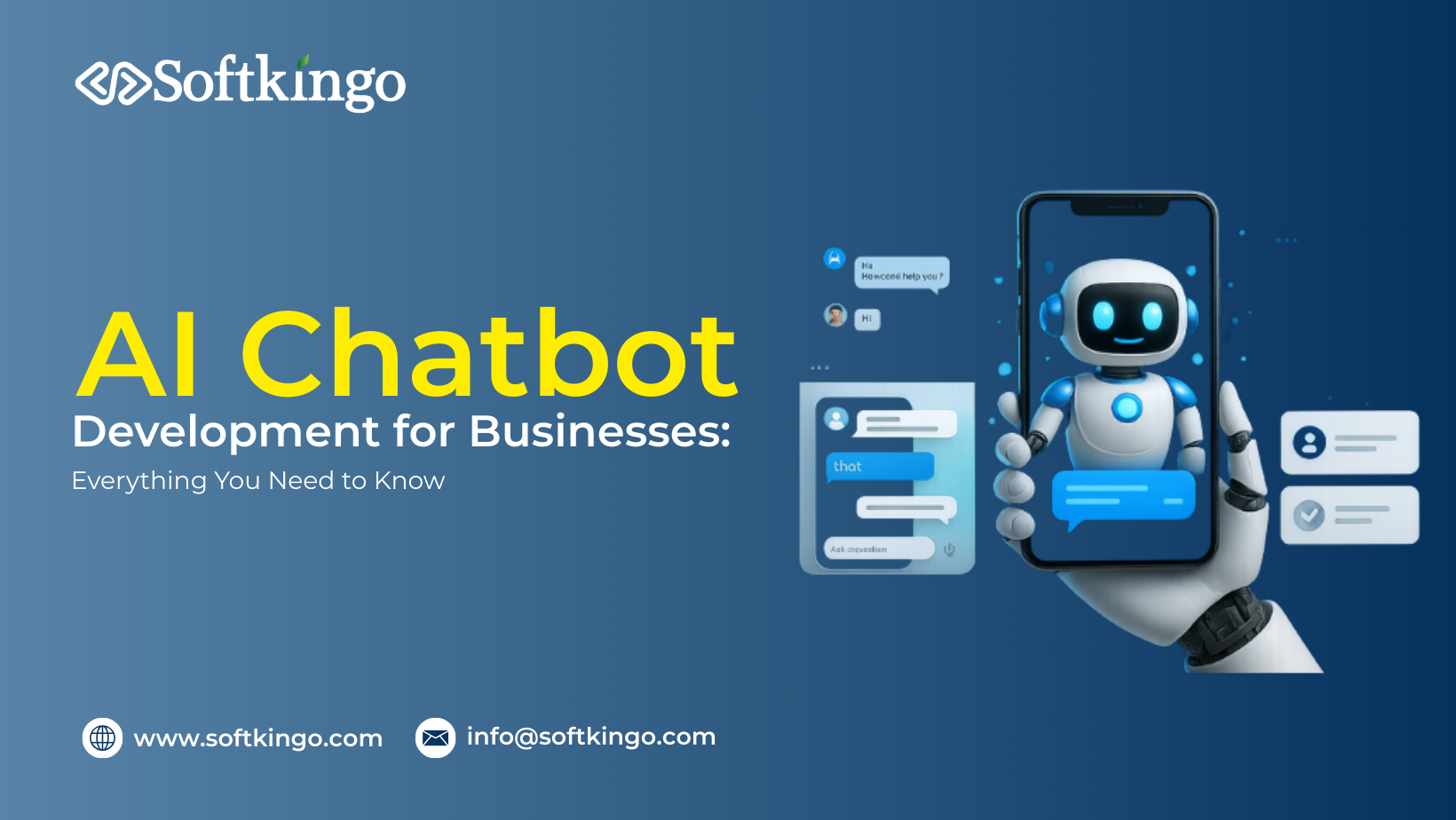
AI Chatbot Development for Businesses: Everything You Need to Know
Let’s face it — people don’t like waiting. Whether it’s asking a question about a product, tracking an order, or needing help with an issue, customers want answers right away. That’s where AI chatbots come in.
An AI-powered chatbot can chat with customers in real time, 24/7. No hold music, no waiting for a reply to an email. Just quick, helpful answers when your customers need them. And the best part? These chatbots can handle dozens — even hundreds — of conversations at once. Something no human team can match.
That’s why more businesses are getting on board. From online stores and clinics to banks, schools, and travel companies — chatbots are helping teams save time, reduce repetitive work, and give better support.
You don’t need to be a tech giant to use them, either. Whether you’re running a small e-commerce shop or managing a growing company, a chatbot can help you connect with your customers, answer their questions, and even boost your sales — without adding to your workload.
In short, if you want faster customer support, happier customers, and a more efficient team, an AI chatbot might be exactly what your business needs.
AI Chatbot Adoption: Where We Are and Where We're Headed
AI chatbots aren’t just a trend — they’re quickly becoming essential, especially for businesses in eCommerce and customer service. Why? Because they’re getting really good at what they do.
Recent studies show that chatbots can now handle up to 70% of customer queries from beginning to end, without needing a human to step in. That’s a game-changer. It means faster support for customers — and serious savings for businesses, with some cutting customer service costs by as much as 30%.
And here’s the thing: people are starting to prefer it this way. Nearly half of all users say they’d rather talk to a chatbot if it means getting quick, accurate answers — no waiting on hold, no back-and-forth emails.
This shift isn’t slowing down anytime soon. In fact, chatbot usage is expected to grow by more than 34% over the next three years.
The business world is already feeling the impact. Back in 2022, the chatbot market was worth around $4.7 billion. By 2028, it’s projected to soar to $15.5 billion — and by 2030, experts predict it could reach a staggering $27.3 billion.
Why the massive growth? Simple. More companies are realizing just how valuable AI can be — not just for saving time and money, but for delivering faster, smarter, and always-available support that today’s customers expect.
Why AI Chatbots Actually Matter
Let’s be honest — no one enjoys waiting hours for a simple answer. Whether it’s checking a delivery, asking about a return, or needing quick help, people want support now. That’s where AI chatbots come in — and why so many businesses are starting to rely on them.
AI chatbots aren’t just robots that spit out generic replies. Thanks to smart tech like natural language processing and machine learning, they actually understand what people are asking — and get better over time. They’re fast, friendly (yes, really), and they never need a coffee break.
Whether you're running an online store, a clinic, a bank, or even an online course — chatbots help take care of the repetitive stuff, so your team can focus on what matters most: real, human connection.
Thinking about adding one to your site? Our guide to building an AI chatbot for your website can walk you through it.
Here’s why more businesses are saying, “Yep, we need a chatbot”:
1. They’re Always On
Customers don’t stick to business hours — and now, you don’t have to either. AI chatbots are available 24/7, ready to answer questions at any hour. Late-night shoppers? Weekend browsers? They’re all covered.
2. They Respond Instantly
Forget waiting in line or checking back later. Chatbots reply in seconds, which keeps visitors happy and way more likely to stick around (and maybe even buy something).
3. They Save You Money
Support costs can add up fast. Chatbots handle the common, repetitive questions — like “Where’s my order?” or “How do I reset my password?” — so your human team can focus on the more complex stuff. That means better efficiency and lower costs.
4. They Make It Personal
Modern chatbots aren’t just smart — they’re thoughtful. They can recommend products, remind users about items in their cart, or offer helpful tips based on past activity. It feels less like a script and more like a real conversation.
5. They Grow With You
Got 10 customers today and 10,000 tomorrow? No problem. A single chatbot can handle thousands of chats at once, so you can scale your support without scaling your headcount.
6. They Help You Sell (Without Being Pushy)
Good chatbots don’t just answer questions — they help guide visitors toward what they’re looking for, ask the right questions, and even help close the sale. That’s more leads, more conversions, and a smoother customer journey.
Difference Between AI Chatbots and Traditional Chatbots
When businesses think about adding a chatbot, one common question is whether to choose a traditional chatbot or an AI-powered chatbot. Both serve the purpose of automating customer communication, but the way they work and the value they bring are very different.
1. How They Work
- Traditional Chatbots: These are rule-based chatbots. They follow pre-written scripts and can only answer the questions that are already programmed. For example, if a customer types “What are your business hours?” the chatbot will give a fixed response that has been stored in the system.
- AI Chatbots: These use natural language processing (NLP) and machine learning. They can understand the intent behind a user’s message, even if it’s asked in different ways. Instead of giving only pre-written answers, they can provide personalized and context-aware responses.
2. Flexibility
- Traditional Chatbots: They are very limited. If a user asks a question outside the pre-set options, the chatbot usually cannot respond properly and redirects to human support.
- AI Chatbots: They are much more flexible. They learn from every conversation and improve over time. They can handle new and complex queries without needing constant updates.
3. Customer Experience
- Traditional Chatbots: Customers may get frustrated because the bot only recognizes specific keywords and commands. Conversations often feel robotic and repetitive.
- AI Chatbots: Customers enjoy a smoother experience because AI bots understand natural language, provide relevant answers, and even mimic human-like conversation. This leads to higher satisfaction and engagement.
4. Cost and Maintenance
- Traditional Chatbots: Setup costs are lower, but maintaining them is harder in the long run because every new query needs to be manually programmed.
- AI Chatbots: Initial investment is higher, but they save money over time by reducing the workload on customer support teams and constantly improving on their own.
5. Best Use Cases
- Traditional Chatbots: Best for simple FAQ responses, booking confirmations, or handling very basic tasks.
- AI Chatbots: Ideal for e-commerce, banking, healthcare, and any business where customers ask varied and complex questions.
The Inner Workings of AI Chatbots: How AI Chatbots Work
AI chatbots are not just programmed tools that follow scripts. They are built with advanced technologies that allow them to understand human language, learn from interactions, and give meaningful responses. Let’s look at how they work step by step.
1. Natural Language Processing (NLP)
The first step in an AI chatbot’s working process is understanding the user’s input.
- Breaking Down Language: NLP helps the chatbot analyze text and split it into smaller parts, such as intent (what the user wants) and entities (important details like time, product names, or numbers).
- Understanding Context: Unlike rule-based bots, AI chatbots use NLP to recognize the meaning even if the question is asked in different ways. For example, “What time do you open?” and “When are you available?” will both get the same answer.
2. Machine Learning (ML)
AI chatbots use machine learning to keep getting better over time.
- Learning from Conversations: Every chat helps the bot understand user behavior, common questions, and preferred responses.
- Self-Improvement: With AI/ML solutions, the chatbot doesn’t need constant manual updates. It adapts automatically to new types of queries and customer expectations.
3. Response Generation
After processing the question, the chatbot decides on the best possible reply.
- Pre-defined Responses: For very common questions, it can give accurate stored answers.
- Dynamic Responses: For complex queries, the bot can generate new responses based on data, context, and past interactions.
- Personalization: AI chatbots can greet users by name, recommend products, or offer solutions based on purchase history.
4. Integration with Systems
AI chatbots are often connected to databases, CRMs, or e-commerce platforms. This allows them to:
- Check order status
- Schedule appointments
- Provide account details
- Recommend products or services in real-time
5. Continuous Improvement
The more conversations an AI chatbot handles, the more accurate and natural it becomes. Over time, it can reduce the need for human intervention and provide faster, more reliable customer support.
Key Features of AI Chatbots
AI chatbots are not only about answering basic queries. With the help of advanced technologies like natural language processing (NLP) and machine learning, they can handle complex conversations, improve customer experience, and save business costs. Below are some of the most important features of AI chatbots that make them valuable for different industries.
Natural Language Processing (NLP) for Human-Like Conversations
NLP helps AI chatbots understand human language in the way people naturally speak or type. Instead of responding with robotic answers, the chatbot can recognize intent and respond in a meaningful way. For example, a customer asking “Where is my order?” or “Track my package” will be understood as the same request. This makes conversations smooth and user-friendly.
Machine Learning for Smarter Interactions
Machine learning allows chatbots to improve over time. Every interaction helps the chatbot learn about customer needs and behavior. This feature ensures that answers become more accurate, personalized, and context-driven. Businesses benefit from reduced errors and higher customer satisfaction.
Multilingual Support for Global Reach
AI chatbots can support multiple languages, making them suitable for businesses serving international customers. A multilingual chatbot helps break the language barrier, allowing users to interact in their preferred language. This increases engagement and improves customer trust.
Omnichannel Chatbot Integration Across Platforms
Modern chatbots can be integrated into websites, mobile apps, social media platforms, and messaging services like WhatsApp or Messenger. This ensures customers get help wherever they are active, without needing to switch platforms. It also provides a consistent customer experience across channels.
Personalized User Experiences with AI Chatbots
AI chatbots can use customer data to offer tailored suggestions. For example, an eCommerce chatbot can recommend products based on previous purchases or browsing behavior. This personalization improves sales, increases engagement, and creates a better experience for users.
Real-Time Analytics and Reporting Features
AI chatbots provide detailed reports on customer conversations, common queries, and user behavior. Businesses can use these insights to improve services, update products, or strengthen customer support. Real-time analytics also helps in tracking performance and customer satisfaction.
Automation of Repetitive Tasks and Workflows
Many repetitive tasks, such as answering FAQs, booking appointments, or tracking orders, can be handled automatically by chatbots. This reduces the workload for human agents and ensures customers get quick responses without long waiting times.
Scalability of AI Chatbots for Growing Businesses
AI chatbots are highly scalable, meaning they can handle thousands of conversations at the same time. Unlike human agents, they do not get tired or limited by working hours. This makes them perfect for businesses of all sizes, from startups to large enterprises.
AI Chatbot Use Cases Across Industries
AI chatbots are not limited to one sector. They can be applied to almost every industry where customer interaction is important. From eCommerce and healthcare to banking, education, and hospitality, chatbots are changing how businesses work and how customers connect with them. Below are the most common and effective use cases of AI chatbots across different industries.
1. eCommerce and Retail
AI chatbots are widely used in online stores and retail platforms. They help customers with product search, order tracking, and payment queries. Chatbots also give personalized recommendations based on browsing history and past purchases. For example, if a customer buys shoes, the chatbot might suggest socks or shoe care products. This increases upselling opportunities and improves the shopping experience.
2. Healthcare
Healthcare chatbot solutions are being used to provide basic medical support, appointment scheduling, and reminders for medication. Patients can ask simple health-related questions and receive instant answers. While chatbots cannot replace doctors, they can guide patients to the right resources and reduce the pressure on hospital staff. For instance, during flu season, a chatbot can answer common questions about symptoms and prevention.
3. Banking and Finance
Banks and financial companies use AI chatbots to assist customers with account details, transaction updates, and loan queries. Chatbots also support secure processes like balance checks and fraud alerts. Instead of waiting for long calls, customers get quick solutions. This not only improves customer satisfaction but also increases trust in financial services.
4. Education and E-Learning
Educational institutions and online learning platforms use chatbots to answer student questions, provide course recommendations, and send reminders about deadlines. Chatbots also act as study assistants by giving learning resources, quizzes, and instant explanations. This makes learning more interactive and convenient for students.
5. Travel and Hospitality
AI chatbots in hospitality help customers book flights, hotels, and vacation packages. They also provide real-time updates on flight status, delays, or cancellations. In hotels, chatbots act as digital concierges, guiding guests about check-in, facilities, and local attractions. This improves the overall guest experience and reduces wait times at help desks.
6. Real Estate
Real estate businesses use chatbots to answer property-related questions, schedule site visits, and share property details instantly. They can also qualify leads by collecting basic information from potential buyers or renters before connecting them with an agent. This makes the sales process faster and more efficient.
7. Human Resources and Recruitment
Companies use AI chatbots in HR to answer employee queries, share company policies, and assist in onboarding. In recruitment, chatbots can screen candidates by asking simple questions and shortlisting them for interviews. This saves time for HR managers and helps improve the hiring process.
At Softkingo, we specialize in AI chatbot development services that work across websites, mobile applications, and social media platforms. The purpose is to create chatbots that are intuitive, user-friendly, and able to meet customer requirements at any hour of the day. Through natural language processing (NLP) and machine learning (ML), we are able to develop chatbots that filter out user intent and give precise answers back to users, and are even able to learn from previous dialogues to enhance performance.
Our chatbot development services are not limited to simple FAQ bots. We create advanced solutions that can support product recommendations, order tracking, appointment booking, lead generation, and even payment processing. This makes them useful not only for customer support but also for marketing and sales.
If you are looking for a chatbot development company that can provide scalable and custom solutions, Softkingo can be the right partner. We focus on delivering chatbots that are secure, reliable, and fully customized according to your business needs. With our AI chatbot development, you can save time, cut costs, and provide customers with the quick, personalized support they expect.
Future Trends in AI Chatbots
AI chatbot solutions are evolving very fast. Businesses are no longer using them only for answering basic questions. With advances in artificial intelligence, natural language processing, and machine learning, chatbots are becoming more intelligent, more human-like, and more capable of handling complex tasks.
Let’s look at some of the key trends shaping the future of AI chatbots.
1. More Human-like Conversations
- Future AI chatbots will understand emotions and tone, making their responses more natural.
- They will be able to detect frustration or happiness and adjust replies accordingly.
- This will help businesses create stronger customer relationships.
2. Multilingual Chatbots
- Businesses are going global, so chatbots will need to support many languages.
- AI chatbots are expected to offer real-time translation for smoother communication.
- This trend will make them valuable for companies serving international audiences.
3. Voice-Enabled Chatbots
- With the rise of smart speakers and voice search, voice chatbots will become more common.
- Customers will interact through speech instead of typing, making conversations faster.
- This trend will help businesses in healthcare, travel, and customer support industries.
4. Personalization with AI
- Chatbots will analyze customer data and behavior to provide highly personalized responses.
- They will recommend products, remind customers of past purchases, and offer tailored solutions.
- This will increase customer satisfaction and boost conversions.
5. Integration with Advanced Technologies
- Future chatbots will work closely with AI, IoT, and AR/VR platforms.
- For example, a chatbot in retail could guide users through a virtual store using AR.
- In finance, bots could connect with smart devices for secure transactions.
6. Proactive Customer Engagement
- Instead of waiting for customers to ask, future chatbots will take the first step.
- They will send reminders, product updates, or personalized offers automatically.
- This proactive support will make businesses more customer-friendly.
Conclusion:
From eCommerce and healthcare to finance, education, and travel, chatbots are reshaping how companies interact with customers. With natural language processing (NLP), machine learning (ML), and automation, they deliver instant responses, personalized experiences, and 24/7 support while reducing costs. Businesses adopt AI solutions to gain scalability, efficiency, and higher customer satisfaction.
As AI future trends like voice-enabled bots, multilingual support, and emotional intelligence emerge, the role of chatbots will only grow stronger. Whether it’s lead generation, customer engagement, or workflow automation, AI chatbots provide measurable value across industries. Companies that embrace chatbot development today will be better positioned for growth and long-term success. Investing in AI chatbot solutions ensures not only improved customer service but also a competitive advantage in a fast-changing digital world.
If you’re ready to explore AI with confidence and want a partner who can guide you from small experiments to scalable, future-ready solutions, Softkingo is here to help. Connect with us today.
Was this article helpful?
Current mood: Okay
Written by Ansh Raj Singh